Signs Your Service Line Is Failing
A consistently wet or unusually green patch in the yard along the line's likely path, even without recent rain, is one of the clearest outdoor signs. Noticeably low water pressure throughout the entire house, rather than at one fixture, often means the service line itself is restricted rather than anything inside the home. An unexplained spike in your water bill with no indoor leak found can mean the leak is actually in the buried service line instead.
Trenchless vs. Traditional Replacement
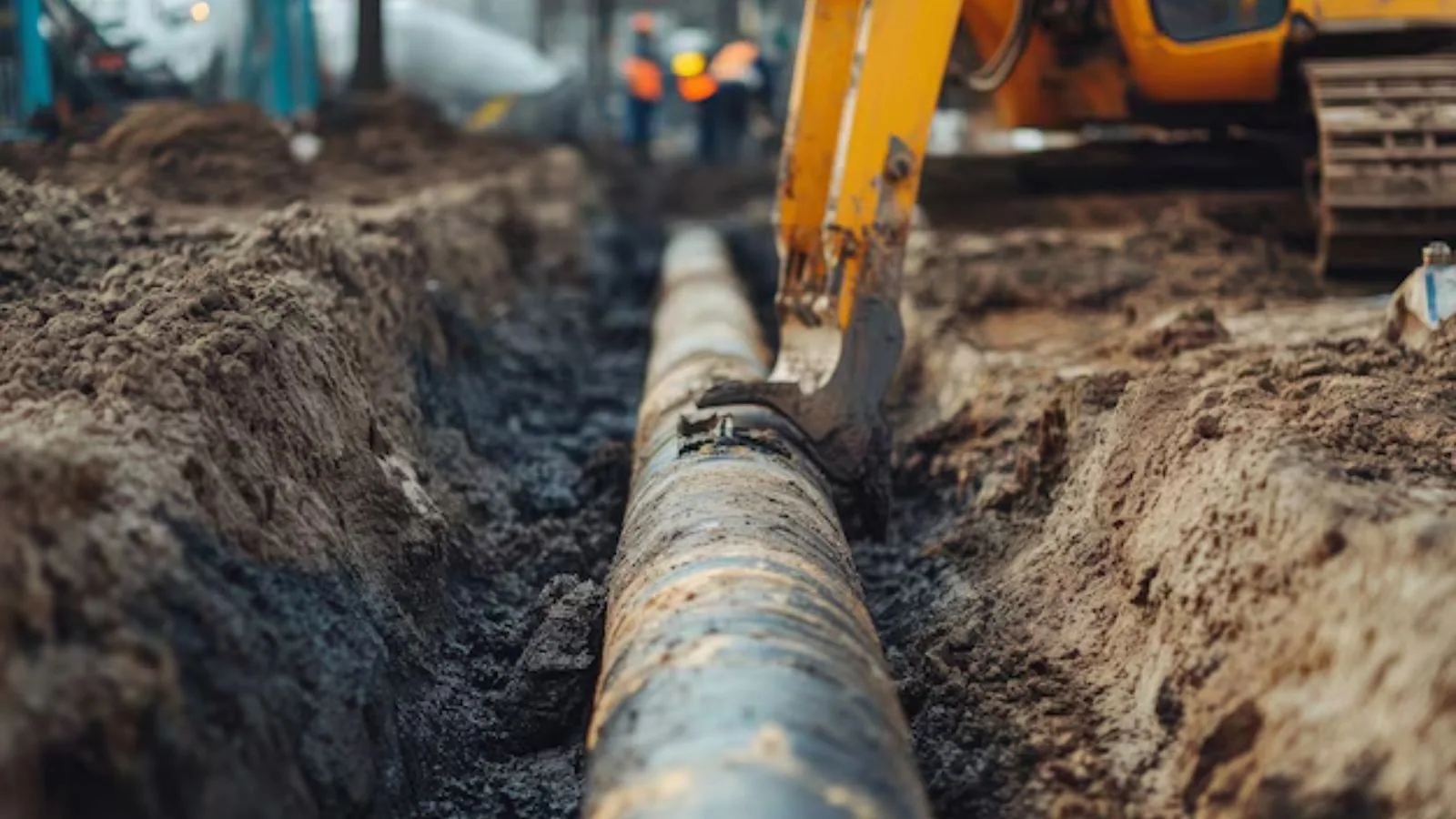
Traditional replacement digs a trench along the line's full path, which is more disruptive to landscaping and hardscaping but sometimes necessary depending on the line's depth and condition. Trenchless replacement pulls a new line through the old one's path using a smaller access point at each end, which limits yard disruption significantly when the ground conditions allow for it. We assess which approach fits your specific property before quoting either one.
Coordinating With the Water Utility
A service line replacement typically requires shutting off water at the curb stop or main connection, which sometimes needs coordination with Del-Co Water or the City of Delaware Water Division depending on which utility serves your specific address. We handle that coordination as part of the job so you're not left trying to schedule a utility shutoff on your own.
How Long You'll Actually Be Without Water
Most service line replacements are completed within a single day, with water restored by evening even on a full replacement, though the exact window depends on line length and how quickly the connection at the main can be scheduled with the utility. We give you a realistic estimate specific to your property before starting rather than a generic timeline that doesn't account for your situation.
Water Line Leak Emergency: Water Coming Out of the Ground
Water pooling in the yard, a swampy patch with no rain, or no water at the tap can mean a service line break. Shut the main valve at the house. If water keeps coming up, the break is on the supply line between the meter and the house or on the utility side.
Do not dig near the leak yourself. We locate the break, confirm which side of the meter it is on, and quote the repair.
Meter-to-House Lines, Well Lines, and Older Service Pipe
Ask your water provider where its responsibility ends and yours begins, because that boundary varies. Homes on wells have a different version of the same problem, a line running from the well to the house or to a barn. Detection tools trace these lines, and replacement can be trenched or pulled through.
If your service line is an older material, replacement while the trench is open is often the better value. The City of Delaware's 2022 water quality report notes that lead in drinking water comes primarily from service lines and home plumbing.
Low Water Pressure: Line, Regulator, or Fixture
Low pressure across the whole house points to a service line leak, a failing pressure regulator, or a partly closed valve. Low pressure at a single fixture is usually a clogged aerator or cartridge. A gauge on a hose bib tells us which situation we have, and we explain the finding before recommending anything.