Delaware's Tree Canopy Is a Real, Specific Sewer Risk
Delaware's downtown and the streets around Ohio Wesleyan University are genuinely tree-lined, which is part of what makes the area's real estate desirable, and it's also a specific mechanical risk to clay and older PVC sewer laterals.
Tree roots seek out the moisture and nutrients inside a sewer line and grow into any small gap at a joint, and that root mass then catches paper and waste, which is what produces the classic slow, gurgling drain that gets worse over weeks.
Homes built before the 1970s in this area are more likely to have clay tile sewer laterals with mortared joints, which are more vulnerable to root intrusion than modern PVC's solvent-welded joints. A camera inspection is the only reliable way to tell which situation a given home actually has.
What a Camera Inspection Actually Shows Us
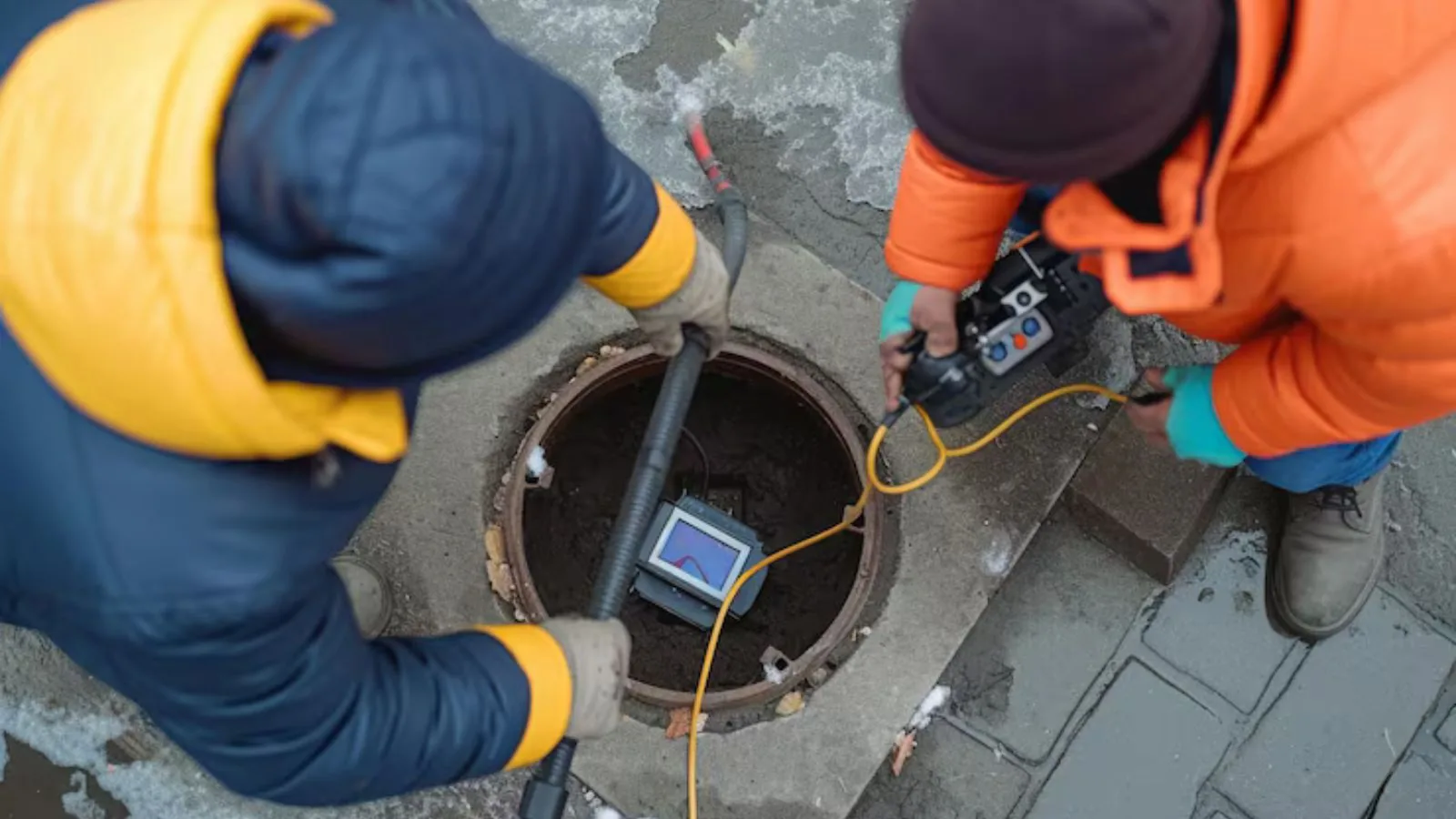
Running a sewer camera down the line before recommending any repair shows the exact location, length, and severity of root intrusion or a cracked section, rather than guessing based on symptoms alone. A localized crack with root intrusion is frequently a candidate for a spot repair rather than replacing the entire line, which is a meaningfully smaller job when the camera confirms damage is contained to a short section.
For a line with root intrusion spread across its full length, or with a significant offset at multiple joints, trenchless lining or full replacement becomes the more durable answer. A spot repair on a line that's failing in several places just delays the same call.
Sewer lateral repair and replacement work in Delaware falls under plumbing registered through the Delaware Public Health District, per the state licensing standard set by Ohio House Bill 487, the same framework that governs any plumbing work tied into the public sewer system.
What to Do Before We Arrive
If sewage is actively backing up into the lowest drain in the house, avoid running any water or using toilets until we arrive, since additional water just adds to what's already backing up. Keep children and pets away from any affected area, since sewage backup carries real bacterial contamination risk, and avoid direct contact with the water.
Sewer Backup Emergency: What Happens When You Call
A sewer backup is an emergency when wastewater is coming up through a floor drain, a tub, or a toilet. Stop running water in the house right away, since every flush and every load of laundry adds to what is already backing up.
A live plumber answers the line at any hour. We send a technician with a drain machine and a sewer camera, clear the stoppage first to stop the backup, and then run the camera to learn why the line failed.
Clearing a backup and repairing a line are two different jobs. We confirm the cause on camera before quoting a spot repair, lining, or replacement, so you only pay to fix what is actually broken.
Main Line Cleaning, Camera Locating, and Trenchless Options
Main sewer cleaning uses a cable machine or a hydro jetter, depending on whether the stoppage is roots, grease, or a collapsed section. A camera pass afterward locates the problem point and its depth. When damage is contained, trenchless lining or a spot repair can avoid digging up the whole yard.
A basement bathroom or laundry that drains through an ejector pump can mimic a main line problem when the pump fails. We check the pump before assuming the main line is at fault.