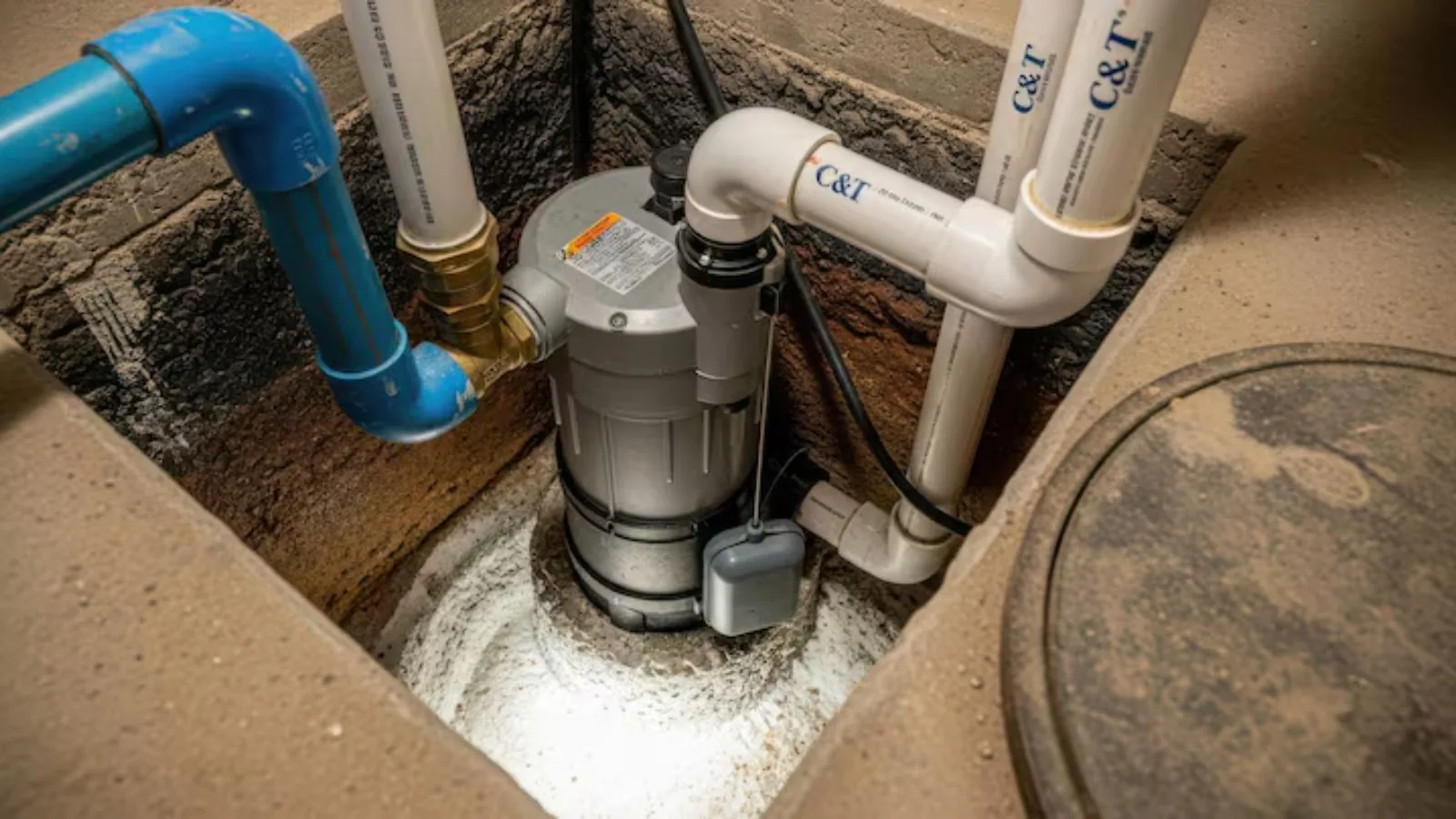
Why Sump Pumps Fail at the Worst Possible Time
A sump pump typically fails during the exact conditions it exists to handle, which is heavy rain or a fast spring thaw, because that's when it's working hardest and any weakness in the motor, float switch, or check valve gets exposed. In Delaware County, where basements are common and groundwater rises during a thaw, a pump that's been quietly struggling for months often only shows an obvious failure during the one storm that actually needed it.
A pump running constantly, rather than cycling on and off with rising water, often means the float switch is stuck or the pump is undersized for how much water is actually entering the basement, which is worth diagnosing rather than just letting it run continuously.
Battery Backup: A Real Consideration, Not an Upsell
The scenario that actually causes basement flooding most often isn't pump failure alone, it's a power outage during the same storm that's driving water into the basement, since standard sump pumps run on household electricity. A battery backup system keeps the pump running through an outage, which matters specifically because Delaware County storms severe enough to flood a basement are also the storms most likely to knock out power.
Sizing a Pump Correctly for Your Basement
A pump that's undersized for the actual volume of water entering a basement will run constantly and shorten its own lifespan, while an oversized pump cycles on and off too rapidly, which wears out the motor and switch faster than steady operation would. We size a replacement pump based on your basement's real square footage and how quickly water has historically entered it, not a single default size fitted to every home.
A check valve on the discharge line matters as much as the pump itself, since a missing or failed check valve lets water flow back down into the pit after each cycle, forcing the pump to immediately restart and do the same work twice.
What to Do If Your Pump Fails During Active Rain
If it's safe to do so, keep electronics and anything on the basement floor elevated on shelving or blocks year-round, so a sudden pump failure doesn't cause additional loss beyond the water itself. Never step into standing water in a basement with any electrical outlets or appliances at floor level, since that's a real shock risk.
Call us right away rather than waiting to see if the water recedes on its own. A basement that's actively flooding during a storm needs both the pump addressed and, depending on how much water has already entered, a water damage assessment before mold becomes a second problem on top of the first.
Sump Pump and Ejector Pump Replacement
A sump pump removes groundwater from a pit at the lowest point of a basement. An ejector pump lifts wastewater from a basement bathroom or laundry up to the sewer line. They look similar and fail for similar reasons, but they are not interchangeable.
A pump that runs constantly, will not start, or has a stuck float often needs a float switch or check valve. A pump that has run for many years is usually replaced.
Emergency Sump Pump Repair During a Storm
A sump pump that fails while it is raining can flood a basement within hours. If the pit is full and the pump is silent, unplug it, check the float, and call the 24/7 line.
We replace failed pumps the same visit when the pit and discharge line allow it. We also check the check valve and the discharge pipe, since a clogged or frozen discharge can look like a dead pump.