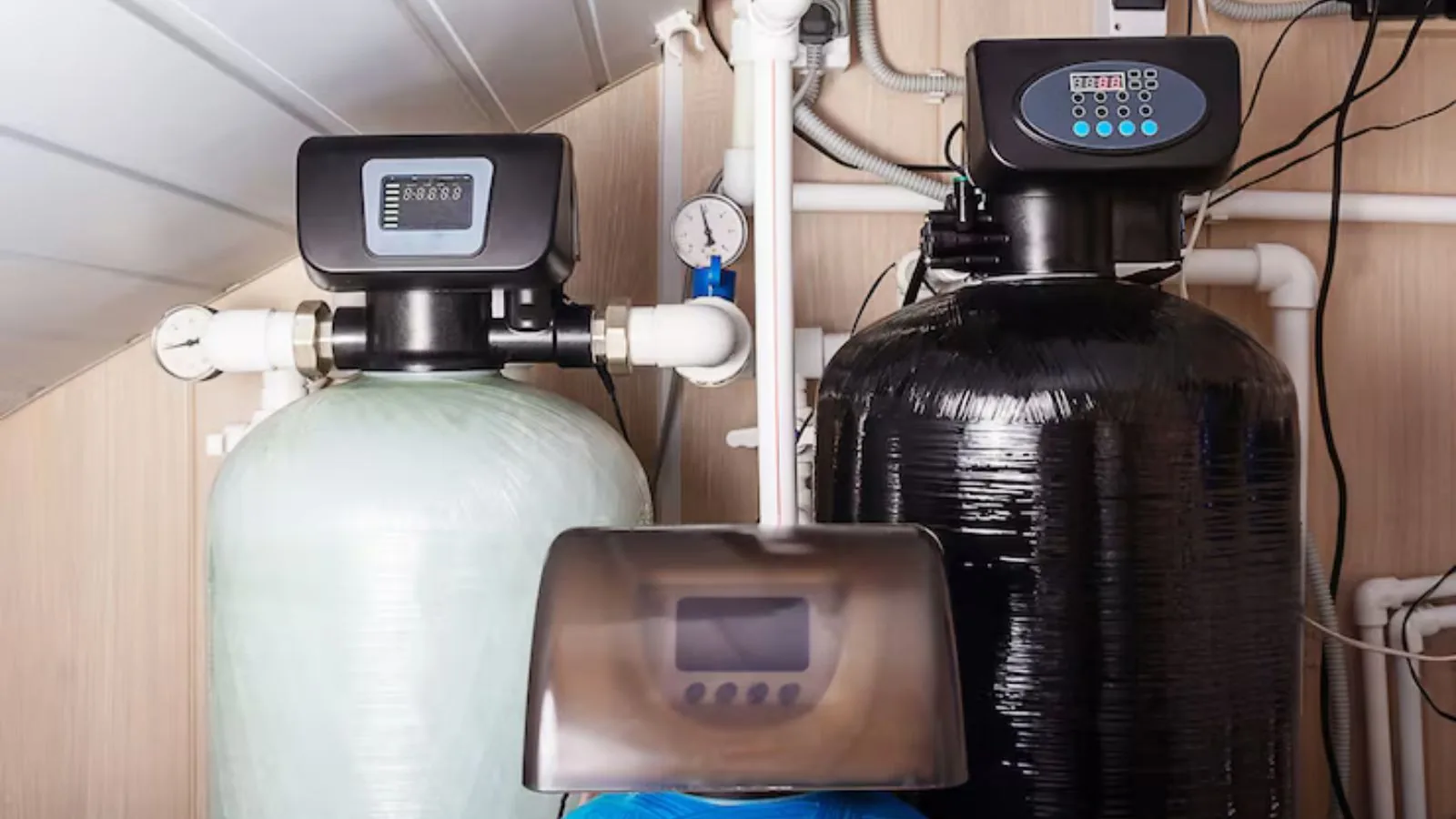
Sizing a Softener Correctly for Your Household
A softener sized too small for your household's actual water use regenerates constantly and wears out faster, while one sized too large wastes salt and water on regeneration cycles it doesn't need. We size a system based on your home's real water hardness level and household size, not a single default unit sold regardless of the specific home.
When a Softener Needs Repair Instead of Replacement
A softener that's stopped regenerating on schedule, or one where water suddenly feels hard again, often just needs a new control valve, a resin bed recharge, or a brine tank issue resolved. All of those are straightforward repairs on a unit that's otherwise in good shape. A system older than 10 to 15 years with a failing resin bed or a cracked tank is usually more cost-effective to replace than to keep repairing piece by piece.
Salt-Based vs. Salt-Free Systems
A traditional salt-based softener physically removes hardness minerals through ion exchange and is the most effective option for genuinely hard water like Delaware's. A salt-free conditioner alters mineral structure rather than removing it, which some homeowners prefer to avoid adding sodium to their water, though it doesn't deliver the same lathering and scale-prevention results as true softening. We walk through both honestly based on what you're actually trying to solve.
Maintaining a Softener You Already Have
Checking the brine tank's salt level monthly and keeping it reasonably full prevents the most common cause of a softener quietly failing without any obvious warning sign. Salt bridging, where a hardened crust forms above the water level in the brine tank, is a frequent issue in humid basements and can fool a homeowner into thinking the tank has plenty of salt when the system actually isn't drawing from it at all.
What to Do If Sodium Intake Is a Concern
A salt-based softener adds a small amount of sodium to your water through the ion exchange process, which is a genuine consideration if anyone in your household is on a sodium-restricted diet. If that applies to you, ask us about a potassium chloride alternative or a separate unsoftened tap for drinking and cooking water, both of which are real options worth discussing before installation rather than after.
Registration and Licensing for Softener Installation
Water softener installation that ties into your home's plumbing follows the same state registration standard, set by Ohio House Bill 487, that governs other plumbing work through the Delaware Public Health District.
Softener Repair and Hardness in Delaware, OH
The City of Delaware's 2022 water quality report lists hardness of 121 ppm, with readings from 99 to 162 ppm during the year. Hardness above what a softener is set for leaves scale on fixtures and heaters. Del-Co customers should ask the provider for its own figures.
Softener repair covers valve heads, resin tanks, brine tanks, and controllers. A softener that regenerates too often, or not at all, usually needs a valve or sensor repair.