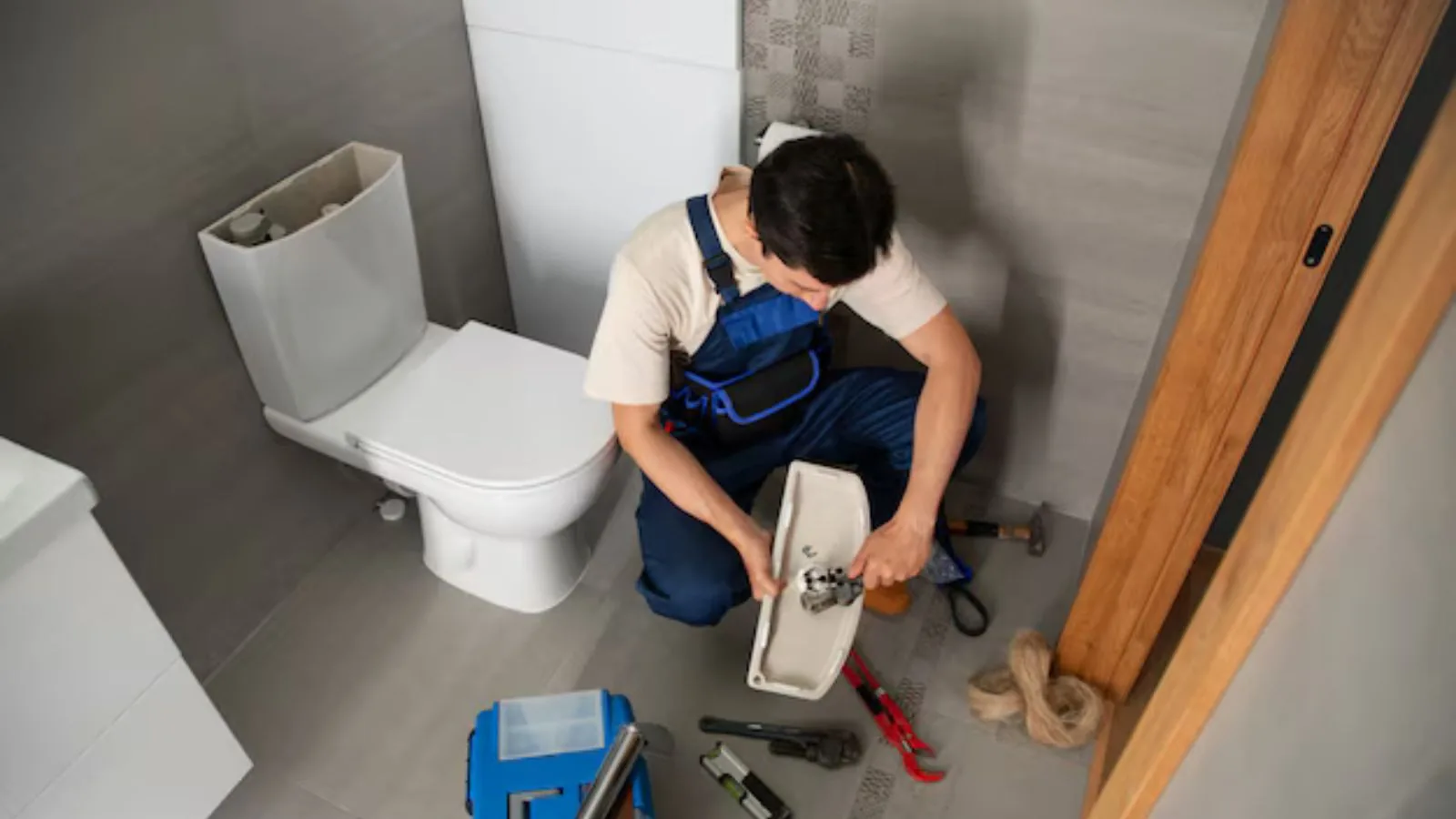
What a Running or Weak-Flushing Toilet Is Actually Telling You
A toilet that runs continuously or cycles on its own is almost always a worn flapper or a fill valve that isn't sealing correctly. Left unaddressed, it can waste a genuinely significant amount of water and money on your bill within weeks.
A weak or incomplete flush more often points to a partial clog in the trap or a mineral-clogged rim, since Delaware's water hardness can build up inside the small rim holes over years and gradually starve the flush of water.
Water pooling at the base of the toilet after flushing, rather than a leak from the tank, usually means the wax ring seal between the toilet and the floor flange has failed. That's a different repair than anything inside the tank and needs the toilet pulled to fix correctly.
Installing a New Toilet in an Older Delaware Home
Homes near downtown Delaware built before modern plumbing standards sometimes have a flange height or rough-in distance that doesn't match a standard new toilet without an adapter, which is worth checking before assuming any toilet will drop straight in. We measure the existing rough-in and flange condition before recommending a specific replacement so the installation goes cleanly the first time.
What Ohio's Hard Water Does to a Toilet's Rim and Fill Valve
The same mineral hardness from Del-Co Water and the City of Delaware Water Division that affects water heaters also builds up inside a toilet's rim holes and fill valve over years. A toilet that flushes noticeably weaker than it used to, without any visible clog, is frequently a rim buildup issue rather than anything wrong with the drain itself, and it's a common enough pattern in Delaware that we check it before assuming a deeper blockage.
A fill valve with mineral deposits inside it can also fail to shut off completely, which produces the same running-toilet symptom as a worn flapper but needs a different part replaced. We test both components separately rather than replacing one and hoping it fixes the symptom.
Overflowing or Leaking Toilet: Emergency Steps
Turn the stop valve behind the toilet clockwise to stop the water. If the bowl is still rising, lift the tank lid and press the flapper closed. Then call, and we dispatch same-day service, day or night.
A toilet that will not flush while other fixtures gurgle or back up points to a blocked main drain, not a toilet problem. Stop all water use and tell us that on the call.
Running Toilets, Leaks at the Base, and Replacement
A running toilet is usually a worn flapper, a failing fill valve, or a chain that is too short. A leak at the base is a failed wax ring or a loose closet bolt. Most repairs finish in one visit.
A toilet that keeps failing is often cheaper to replace than to keep repairing. We also set new toilets for homeowners upgrading a bathroom.